
Vehicle category · Aanhanger Verlichting
Trailer lighting — small trailers and tow-behinds.
Single-axle and tandem-axle trailers towed by passenger cars or vans run on the simplest electrical systems on the road: 12V, no CAN-bus, and a 7-pin or 13-pin connector to the towing vehicle. The lighting decisions are also the simplest — but get them wrong and the trailer fails its annual inspection.
Laatst bijgewerkt 24 april 2026
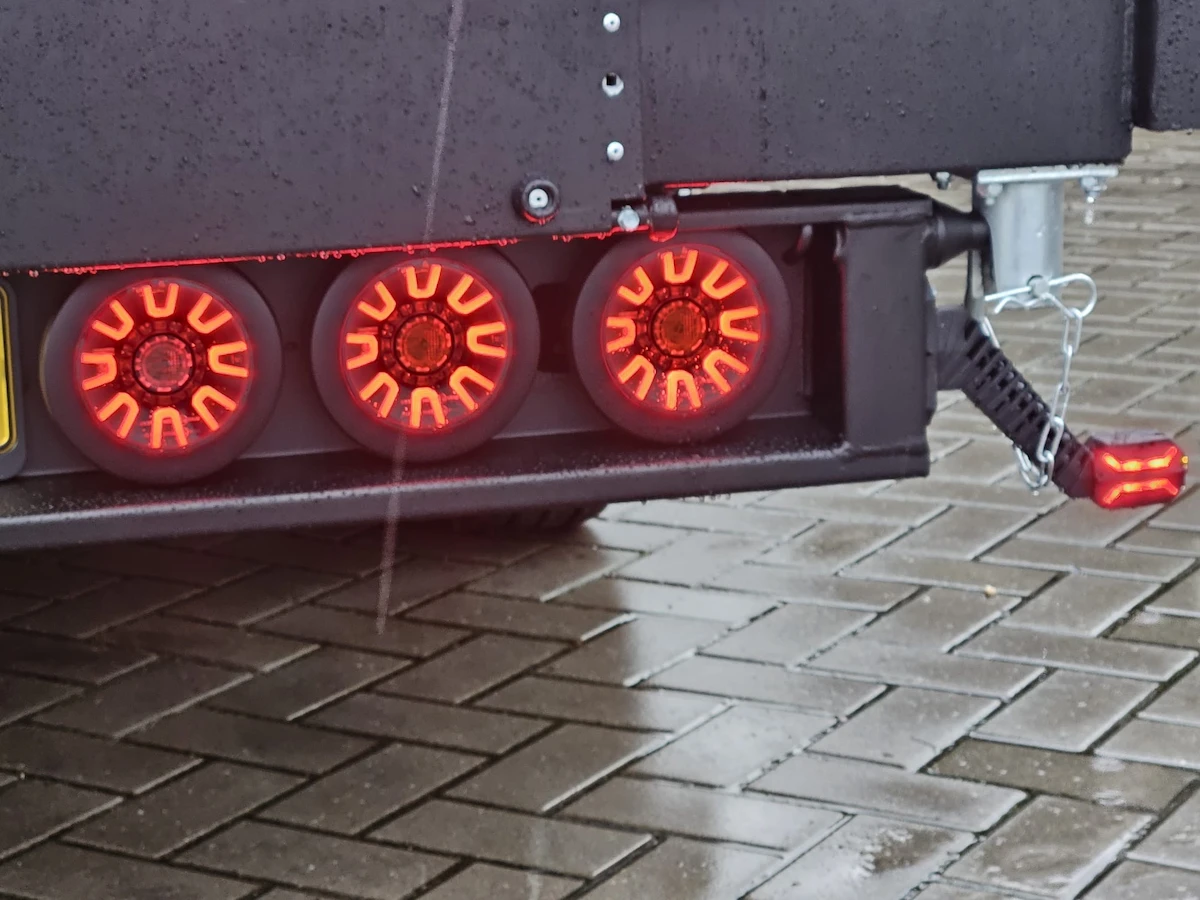
Mandatory lamps on a small trailer
A trailer up to 3.5 tonnes (un-laden plus payload) needs:
- Two red rear position lamps (R7) - Two red stop lamps (R7) - Two amber rear direction indicators - Licence-plate lamp - Two red rear reflectors (triangular)
Trailers wider than 1.6 m additionally need: - Two white front-marker reflectors (or lamps if travelled in low light) - Two amber side-marker reflectors
Trailers over 6 m long need additional intermediate side-marker lamps.
A trailer kept registered but used only for occasional duty (boat trailer, garden trailer) still needs all the above to remain road-legal — a year-old failed lamp is failure-of-construction-and-use under any country's MOT equivalent.
7-pin vs. 13-pin connectors
**7-pin (ISO 1724 / N-type)**: the older standard, common on older cars and small utility trailers. Carries the basic lamp circuits — tail, stop, indicators, fog, plus a single ground.
**13-pin (ISO 11446)**: the modern standard since around 2010. Adds permanent positive feed (for caravan fridges and reverse cameras), continuous ignition feed (for tracker units), and a separate reverse-light feed.
Switching from 7-pin to 13-pin is straightforward — adapter cables exist — but if the trailer is wired pre-2010 the wire colours from the trailer end may not match the modern standard. Always check pin-by-pin with a multimeter before fitting LED replacements.
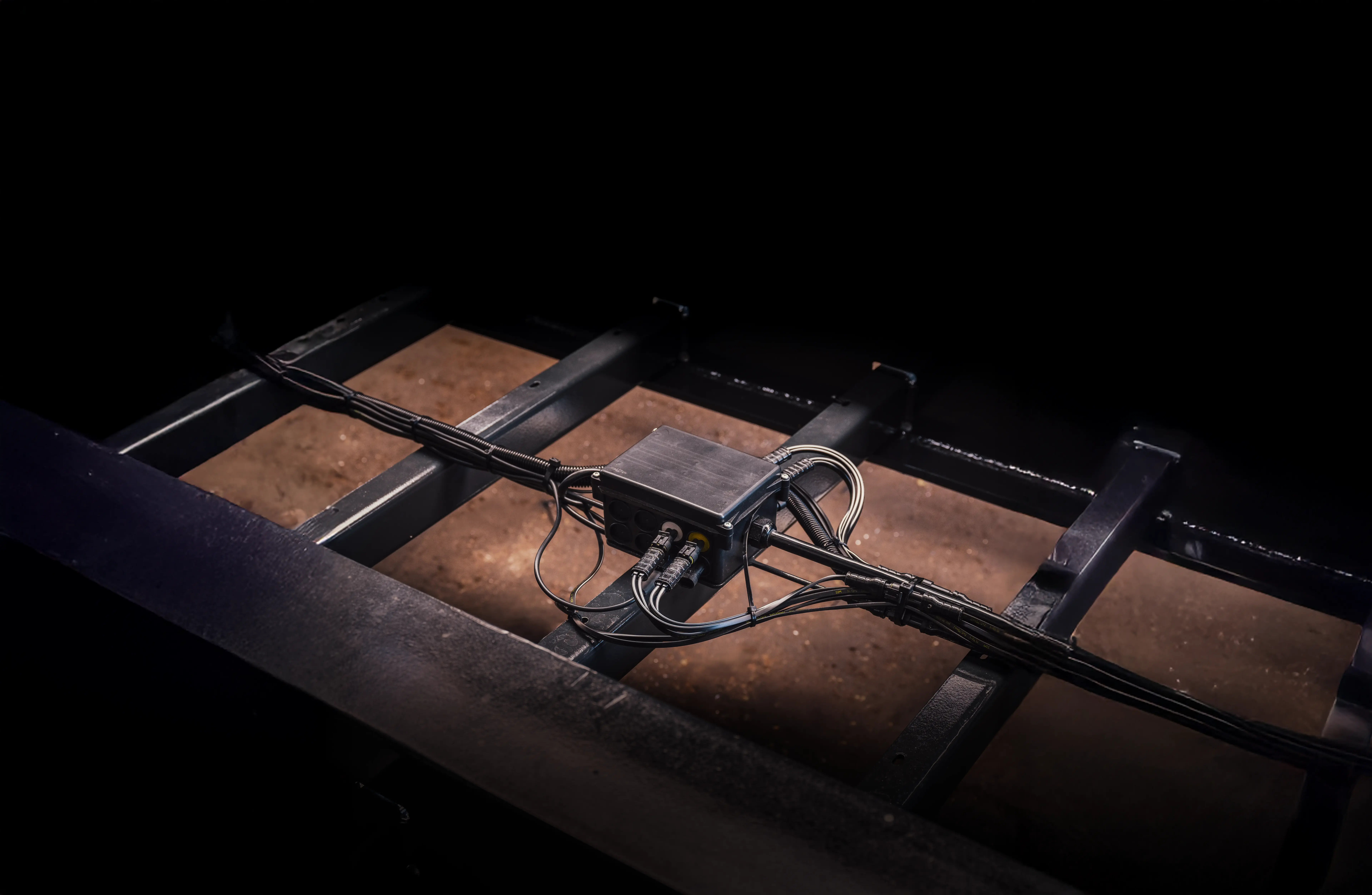
LED retrofit on an old wiring loom
Many small trailers were originally fitted with filament lamps via a single 1 mm² loom that runs from the tow-bar connector to the rear cluster, with no separate ground (return is via the chassis frame).
LED lamps draw less current than filaments, which is fine — but they're also much more sensitive to ground-resistance issues than filaments are. A rusted ground point that worked OK with a 21W filament will cause the LED to flicker or refuse to light at all.
The fix when retrofitting LED on an older trailer: run a dedicated 1 mm² ground wire from each lamp back to the connector pin 13 (the dedicated ground), instead of relying on the chassis. Adds 30 minutes of work per trailer and avoids a lot of frustration.
If the LED tail flickers when you press the brake, it isn't the lamp. It's the ground. Run a dedicated return.
Theft and overnight care
Small trailers without secure storage are popular targets for opportunistic theft. Two cheap deterrents that pay back: a wheel-clamp (mechanical, prevents drive-away) and a lamp-cluster identifier (UV-printed VIN or owner code on the lens, visible only under UV light, useful for proving identity if the trailer is recovered).
We don't sell wheel-clamps. We do sell lamp clusters with replaceable polycarbonate lenses, which makes UV-marking realistic.