
Insight
The future of LED lighting on commercial vehicles.
The 2015–2025 decade was about replacing filament lamps with LEDs. The 2025–2035 decade is about replacing static LED lamps with adaptive, networked, vehicle-aware ones. Here's what's coming to commercial-vehicle lighting in the next five years, what's in the labs today, and what a fleet buying new trucks in 2026 should ask for as future-proofing.
Laatst bijgewerkt 24 april 2026
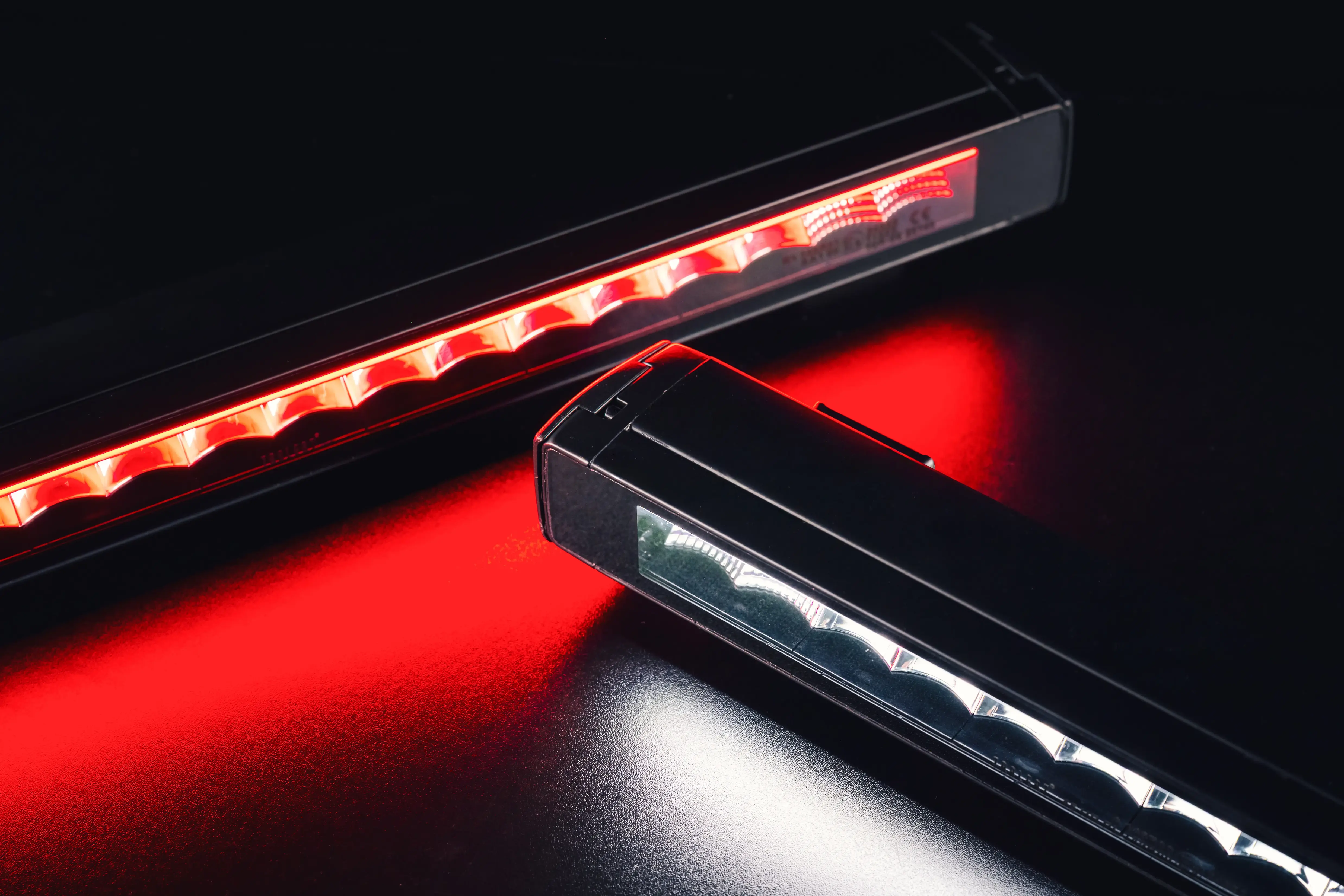
Matrix LED — beam-steering without moving parts
A Matrix LED headlamp replaces the single high-intensity beam of a traditional lamp with 50–200 individually-controlled LED elements. Each element can be dimmed, blanked or left at full output independently. A vehicle-mounted camera identifies oncoming drivers and the lamp controller blanks the elements that would dazzle them — while the rest of the beam stays at full high-beam intensity.
In passenger cars this is mainstream on premium brands since 2020. On commercial vehicles it's arriving model-by-model: the 2023 Mercedes-Benz Actros offers it as an option, Volvo's 2024 FH update includes a basic Matrix variant. Expect it standard on new flagship trucks by 2027.
For aftermarket retrofits: not feasible yet. The controller interfaces are proprietary and not designed for drop-in replacement. When Matrix becomes the spec, the aftermarket will move to selling complete assemblies rather than individual lamps.
OLED and micro-LED rear signatures
Rear-lamp signatures are becoming a design differentiator. Premium passenger cars already use OLED segments (Audi, Porsche) for animated stop-and-turn indicators — sequential indicators that sweep in the direction of the turn, then settle as a flash.
Commercial vehicles follow about five years behind. Expect first Matrix-rear variants on European long-haul tractors around 2027–2028. Micro-LED (higher intensity, brighter sunlight readability) is in trials but not shipping in volume yet.
Regulation is still catching up: R148 permits animated indicators but most national interpretations currently require a static on-off flash. The R149 successor will likely relax this.
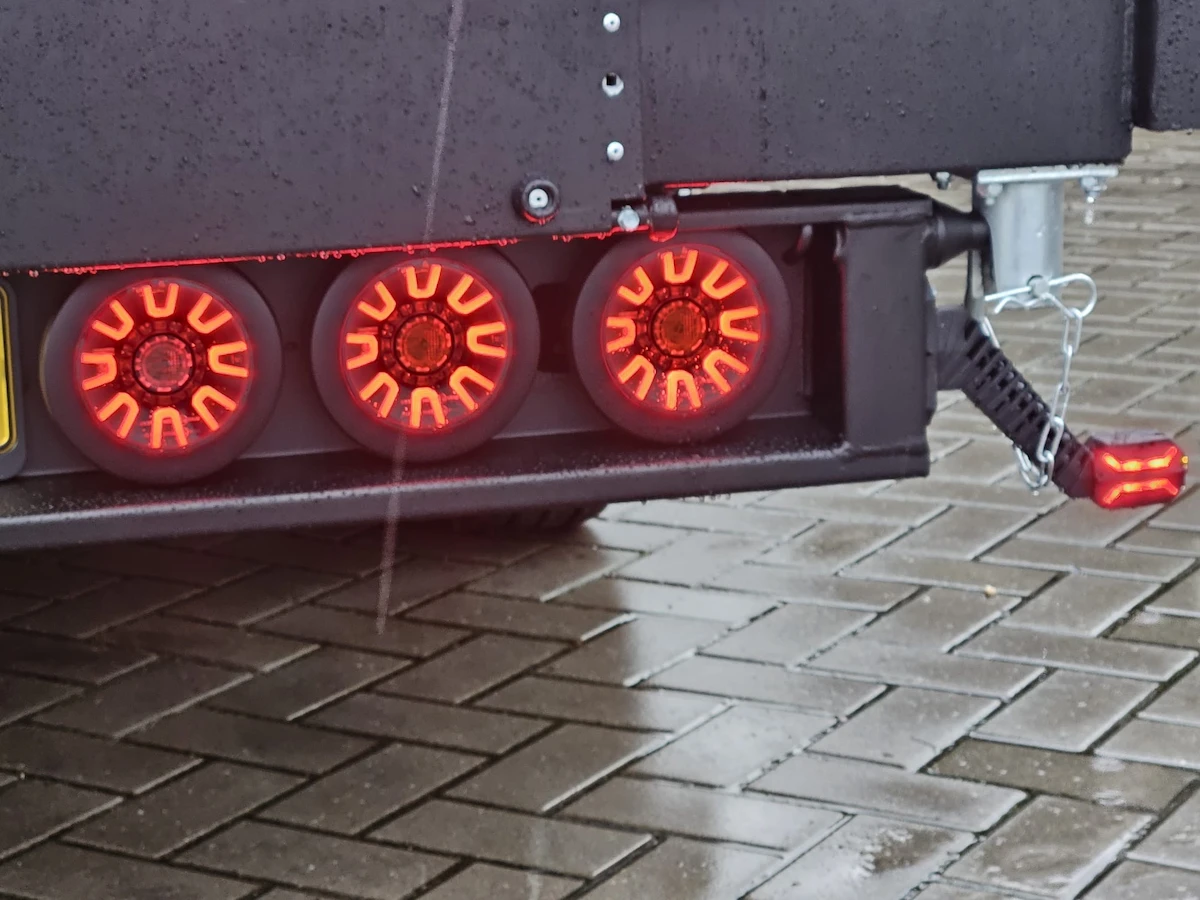
Vehicle-to-lamp communication (V2L)
Trailer ECUs already communicate lamp-status back to the tractor dashboard. The next step is bi-directional: the tractor tells the trailer lamp "brake pressed, reduce animation dwell by 50ms" or "reverse engaged, flash rear spots at 4Hz for 5 seconds".
ISO 11992 (the trailer-tractor data bus standard) has the headroom for this — the upcoming 2027 revision adds lamp-level addressing as a standard feature. We'll see fleet-level trials in 2026–2027, standard availability on new builds 2029-ish.
For aftermarket, this means an LED rear cluster bought in 2025 that carries an "ISO 11992 compatible" spec will still be compatible in 2030. Ones that only support the current trailer-monitoring subset won't.
Solid-state lidar and lamp-integrated sensors
A growing number of OEMs are placing radar and lidar sensors inside the lamp housing — the lamp becomes a sensor pod as well as a light source. Mercedes-Benz's new Actros places the forward radar behind the DRL cluster; Volvo integrates short-range ultrasonic into the cab-side marker lamp housings.
The implication for aftermarket: lamp replacements on these vehicles will come with sensor calibration requirements. A workshop that swaps a marker lamp on a 2027 Volvo will need to trigger a sensor-realign procedure afterwards. Some of this is already happening on passenger cars (windscreen replacement triggers camera calibration); the same flow is heading to trucks.
The lamp that you bolt on today is the boring half of the lamp that ships on a truck in 2030. The other half is a sensor — and the wiring harness already knows it.
What to buy today to avoid obsolescence
For a fleet specifying lamps on trucks ordered in 2026:
- Choose R148/R149-approved lamps over R7/R23 where available — future-proof against the 2027 mandatory transition. - Ensure CAN-bus LED rear lamps are ISO 11992-compatible, not just "trailer-monitor friendly". - Prefer modular lamp housings (replaceable LED blocks) over sealed units — the LED technology will evolve faster than the housing needs to. - Buy from suppliers that publish a declaration of conformity listing every applicable regulation. If the conformity document is a single stamp and a trademark, it's not enough.
Future-proofing vehicle lighting is mostly about buying the documentation, not the hardware.