
Vehicle category · Bedrijfswagen Verlichting
Light commercial vehicle lighting — vans, sprinters, transporters.
Light commercial vehicles (Mercedes-Benz Sprinter, Volkswagen Crafter, Ford Transit, Renault Master, Iveco Daily, Fiat Ducato) run 12V passenger-car-style electrical architectures even when their bodies look truck-shaped. The lighting decisions here are closer to a car retrofit than a heavy-truck install — different fuses, different cable cross-sections, smaller power budget.
Laatst bijgewerkt 24 april 2026
12V — the assumption that catches installers
Vans run 12V. A "24V truck lamp" fitted directly to a 12V van will be perfectly dim or refuse to start. Most professional LED lamps are 12/24V dual-voltage and don't care which they see — but the budget-end lamps often aren't. Always check the spec label before fitting.
The Iveco Daily is the corner case: chassis-cab variants are sold under truck branding but use 12V electrics. Treat as a van, not a truck. Most other van brands (Sprinter, Crafter, Master, Transit, Daily, Ducato) are honestly 12V from the showroom.
Common van applications
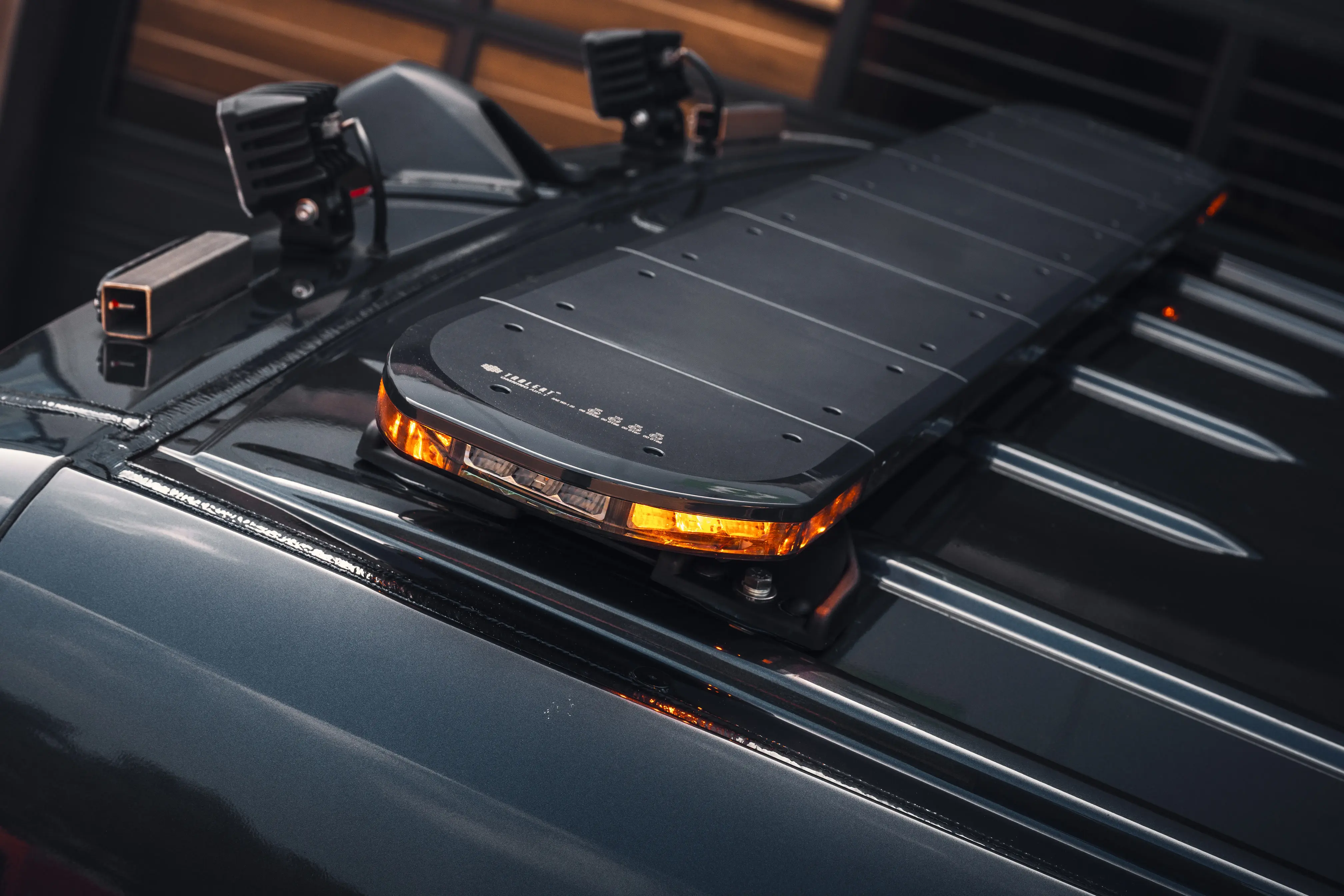
**Service / utility**: amber R65 beacon (single, magnetic-mount or DIN-pole), twin-rear LED work lamps for site lighting, rear marker lamps for road-presence.
**Recovery / breakdown**: a longer R65 beacon bar across the cab roof, twin amber driving lamps on the bull bar (where fitted), reversing camera-paired work-light cluster on the rear.
**Fleet delivery**: usually nothing aftermarket — the OEM spec is enough. Sometimes an additional rear marker for parcel-courier identification.
**Mobile workshops** (plumbers, electricians, glaziers): rooftop work-light cluster powered from the van's auxiliary battery (not the starter battery), so a couple of hours' on-site lighting doesn't strand the driver.
The auxiliary battery question
A van that uses lighting at standstill (mobile workshop, glaziers' rig, ice-cream van, mobile food unit) needs an auxiliary battery. The factory starter battery has 60–80 Ah of capacity and shouldn't be drained below 50% if you want it to keep starting the engine.
Standard kit: a 90 Ah AGM auxiliary, a voltage-sensing relay (VSR) that connects the auxiliary to the alternator only once the starter battery is full, and a low-voltage cutoff that shuts off the auxiliary at 11.8V to protect it. We can supply all three; the relay and cutoff together run around €120 and save the cost of a tow when a fitter forgets a lamp on overnight.
Mounting on a van roof
Most modern van roofs are stamped steel, not the riveted aluminium of older builds. Drilling for bolt-mounted lamps is structurally fine but requires sealing the holes from underwater (jet-wash spray, parking-garage condensation).
Two clean options: factory roof-rack rails (where fitted) accept clamp-on accessory bars without drilling; or magnetic-mount beacons for occasional duty-cycle work. We don't recommend self-tapping screws into steel roofs — they age into rust pinholes within four winters.