Vehicle guide · Trucks
Professional LED lighting for MAN trucks.
MAN's TGL, TGM, TGS and TGX share an electrical architecture built around 24V, FMS-ready CAN buses and load-dump-tolerant wiring. Fitting aftermarket LED lamps to those platforms is straightforward — provided the lamps meet ECE R10 for EMC and the driver and DRL circuits are wired into the right fuse group. This page covers what fits where, which approvals to check, and the cable specs that keep the CAN happy.
Laatst bijgewerkt 24 april 2026
The four MAN ranges, in practice
The TGL is the light-duty delivery tractor — 7.5 t to 12 t, short wheelbase, often in urban fleets. Most TGL builds run a single battery bank and a simpler 12/24V auxiliary loom. Space on the cab roof is limited; compact light bars (36–50cm) and slim beacons win here.
The TGM covers 12 to 26 t and lives in distribution. Bigger alternator output, more roof real estate, and nearly every TGM leaves the factory with a proper 24V auxiliary loom. This is the sweet spot for twin driving lights plus an amber warning bar.
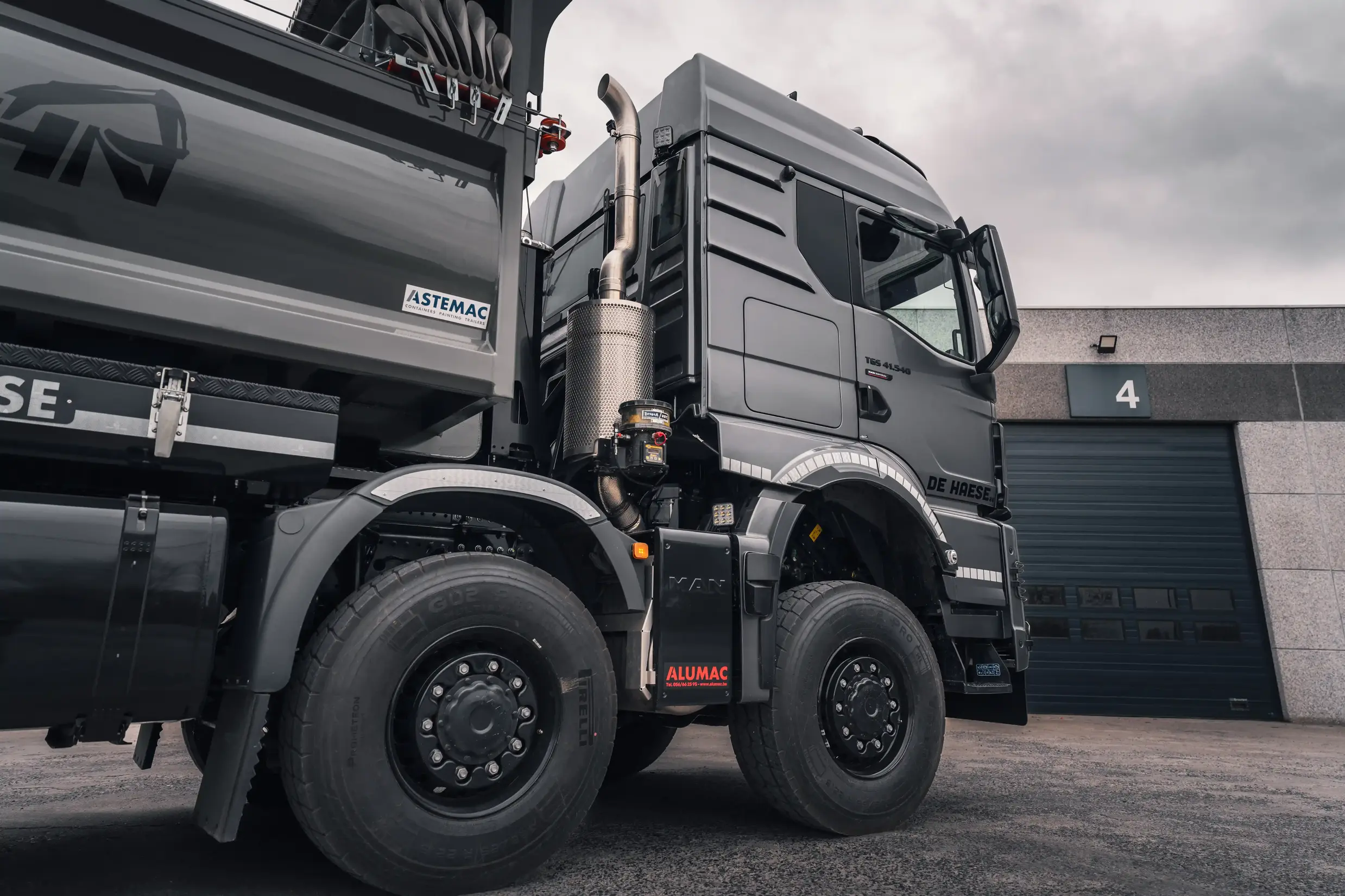
The TGS is the construction and vocational platform. 3-axle and 4-axle chassis, tippers, concrete mixers, heavy haul. These chassis vibrate more than the long-haul siblings, which matters for lamp choice — look for IP69K and "vibration-tested to MIL-STD-810G" on the datasheet, otherwise expect filament-LED joints to crack within 18 months.
The TGX is the long-haul tractor. Aerodynamics matter; body-coloured light bars and flush-mounted marker lamps sell well here because flat-deck-mounted extras spike fuel consumption more than you'd think.
What to check before you fit
Three electrical gotchas come up more than anything else on MAN platforms.
First, the CAN bus. From model-year 2018 onward, MAN trucks monitor the tail-light circuit and throw a dashboard warning if they see a current profile inconsistent with a bulb filament. LED rear lamps with built-in CAN-matching resistors avoid this — cheap LED rears without one will trigger an error light every time you reverse.
Second, the load-dump spec. MAN's auxiliary fuse block will spike up to 60V for 400ms during a load-dump event (disconnecting the battery while the alternator is charging). Lamps rated only to 32V will let go — often spectacularly. The ECE R10 test on a properly certified lamp covers this; the OEM spec goes further. If a product claims "automotive-grade" without an R10 stamp, walk away.
Third, the fuse group. MAN's auxiliary loom is NOT a clean place for a beacon. Fit warning lights on the dedicated high-current auxiliary fuse (usually F27–F32 in TGS/TGX); avoid the accessory fuse that also feeds the cab-fan controller.
Mounting options MAN trucks actually support
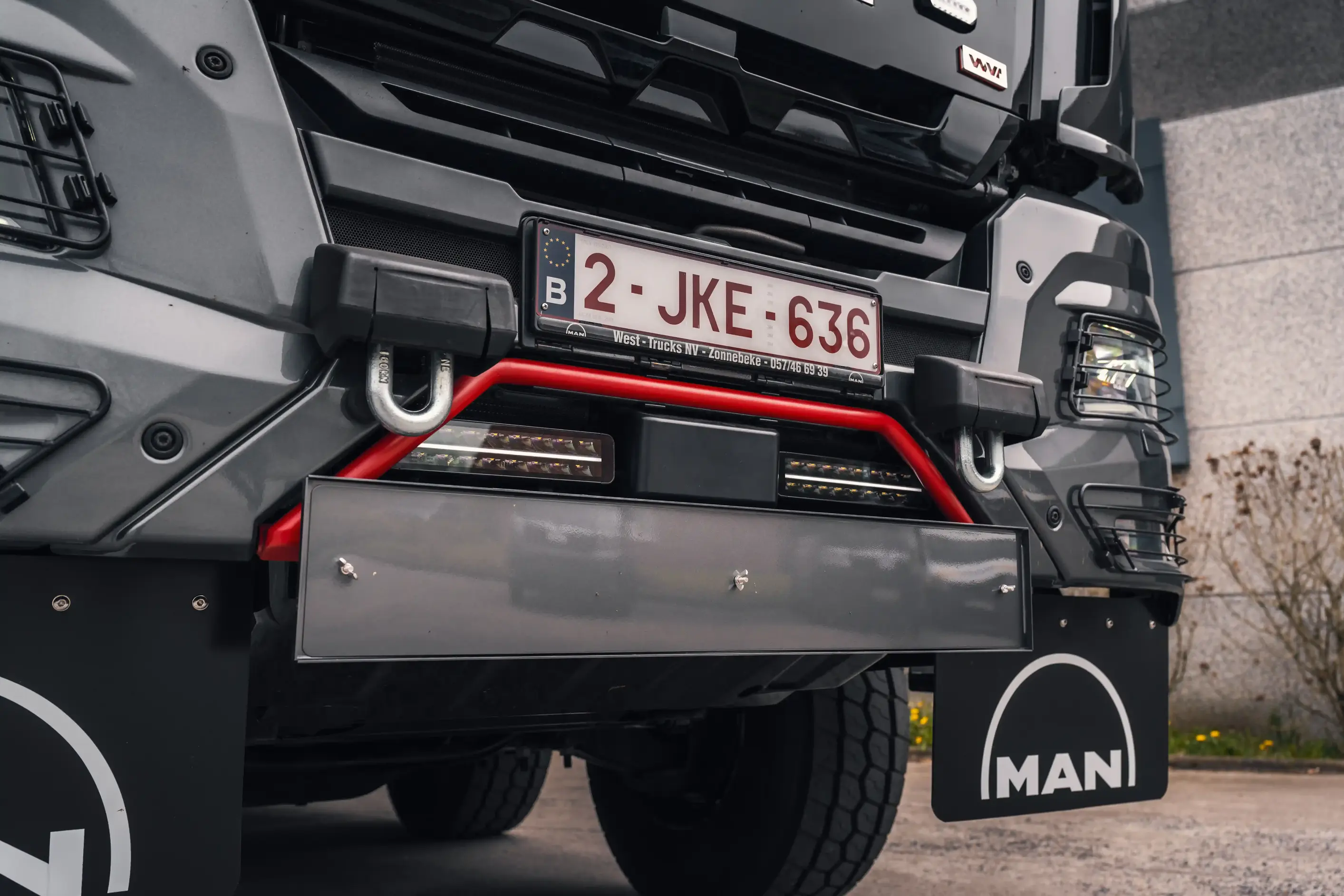
The factory roof rails on a TGS or TGX accept both DIN-pole and flat-bolt beacons without drilling into the cab shell. For light bars, the bull-bar option on a TGS has four factory-pre- threaded M10 mounting points at 320mm centres — almost every 22-inch LED bar on our catalogue matches that pattern out of the box.
For a TGL or TGM urban build, the preferred pattern is a body-coloured low-profile bar behind the windscreen wiper, fed through the existing rubber gasket. No drilling, no sealing joints, and it passes European Whole Vehicle Type Approval because the lamp sits behind a factory panel.
Cable, connectors, and a warning
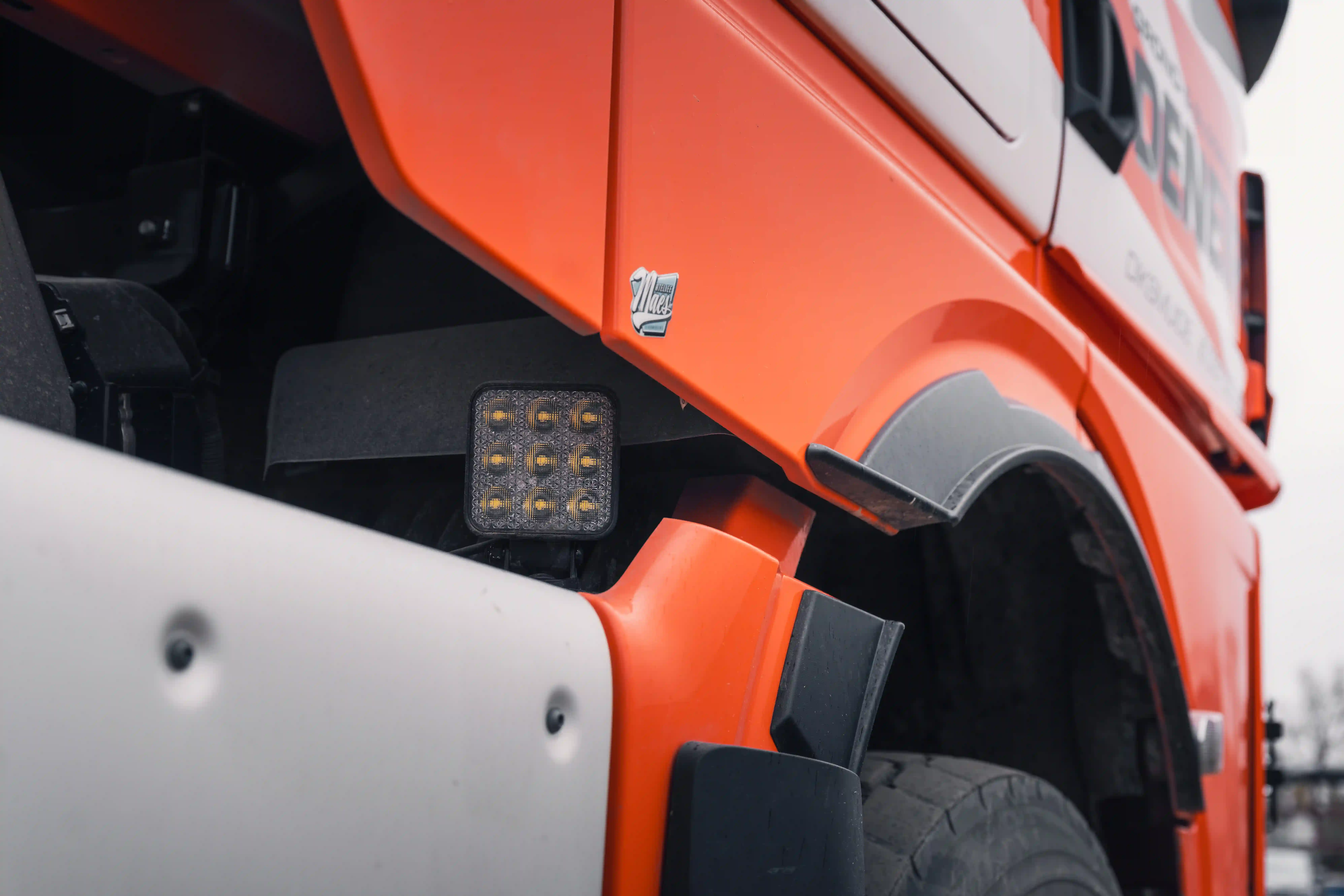
MAN wiring looms run on DTM-series Deutsch connectors on the chassis and on SuperSeal 1.5 for the peripheral runs. Fitting an aftermarket lamp with a bare-wire tail means soldering or crimping into one of those connectors — do it with a properly-rated heat- shrink butt splice and not with scotch-locks, because a corroded scotch-lock on a TGX at 110km/h will give you an intermittent dashboard warning that reads as an alternator fault.
Factory-fitted T-adapters exist for some runs (the rear marker lamp harness on a TGS is a good example); use them where available.
A wiring job done right in a workshop takes 20 minutes per lamp. A wiring job done wrong in the rain at a depot takes half an afternoon to trace. We ship every beacon with a Deutsch pigtail pre-fitted for this reason.
A note on night work
Most fittings happen in a heated workshop, in daylight, with a tea within arm's reach. Some don't — a tipper rolling into a compound at the end of a 14-hour shift, one marker lamp out, and a fitter with a head-torch trying to get it road-legal before the morning run. If that's your reality, buy the better connector, pay for the better gasket, and keep one spare lamp of every class in the cab. Night-shift repairs cost three times as much as a next-day workshop slot.